

Sunday, 1 January 2023

Our Most Popular Online Content in 2022

With 2022 done and dusted, we've dived into our online statistics for the year. We were delighted to have welcomed 48,655 people to our website 63,718 times! If you're counted in that number, thanks for stopping by!

Below are the top ten most popular pages on our website in the year that was 2022, which is a nice blend of state-wide and local history content.


1. Index of Western Australian Teachers
Topping the list was our index of state school teachers in Western Australia from 1900 to 1980, which was compiled from historic editions of The Education Circular.

2. Biographical Dictionary
Our continually expanding Biographical Dictionary of Coorow, Carnamah and Three Springs comes in at number two. We've listed the most popular biographies in a supplementary list further below.

3. Index of Western Australian License Plates
Number three is our index of early Western Australian motor vehicle registrations, which spans the years 1915 to 1928. This great index was compiled from the RAC's Year Book & Road Guides which listed every registered vehicle in the state!

4. Virtual Museum
Our virtual museum of 14 online exhibitions continues to be a crowd-pleaser. Its exhibitions showcase objects, images and stories from our collection.

5. Midland Railway
Speaking of our virtual museum, its exhibition on the Midland Railway is yet again one of our most popular pages.

6. Cemeteries
Our cemetery index spanning the Mingenew Moora, Perenjori, Three Springs and Winchester cemeteries comes in at number six.

7. Schools
Our online exhibition on schools across Carnamah, Coorow and Three Springs is a surprise appearance in the year's top ten.

8. Macpherson Homestead
Our eighth most popular page was our visitor info for the historic Macpherson Homestead, located just one kilometre east of the Carnamah townsite on the Bunjil-Carnamah Road.

9. Three Springs History
As with previous years, our early history of Three Springs continues to be one of our most well-read pages.

10. Before Electricity
Our online exhibition on life prior to electricity comes in at number ten, which is no surprise as it is widely used in classrooms across WA and further afield.
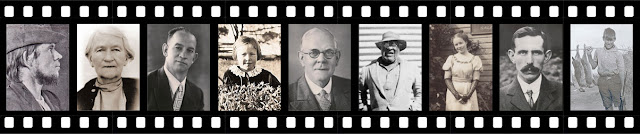

Our Biographical Dictionary contains information on thousands of people with connections to Carnamah, Coorow, Three Springs and other nearby places. Below were the most viewed entries in the dictionary during 2022.

1. Local bushranger Frank Thomas

2. Bishop Rosendo Salvado of the Benedictine Monastery in New Norcia

3. Shepherd and farmhand Joachim Dido of Carnamah

4. Granny Latham of Coorow (Mary Oliver / Latham)

6. Sarah Campbell of Arrino

7. Renowned building contractor and later the world's largest individual farmer Gus Liebe of Waddy Forest

8. Scottish born Duncan Macpherson who established the pastoral station 'Carnamah' in the 1860s

9. Albert Nebrong, the son of Aboriginal woman Mary Wirbina and a member of the Macpherson family

10. Carnamah farmhand, shearer and farm manager Teddy Edwards

Friday, 14 January 2022

Child Engagement in Museums: Pop Art

The third instalment in a series of guest blog posts by Shiona Herbert of Ignite Your Audience

Museums and heritage sites offer an abundance of artistic stimulation. You can provide a simple clipboard of blank paper and a grey lead pencil and invite visitors to sketch what they like: an artefact, a building, a display, a landscape… whatever catches their eye.

Photography boffins can spend hours creating perfectly composed photographs of heritage objects. And in this digital age, we can take a quick snap on our SMART phone of items that inspire us in a museum space.

In fact, a wonderful way of bringing the past and the present together is to take a photo of something from the past and use a present-day App to give it a whole new interpretation. This is something that the Perenjori Primary School students achieved while exploring our virtual exhibitions.

Students scrolled through our online content looking for something to catch their eye. They saved a copy of an image they found appealing and turned it into an example of Pop Art via the PhotoFunia App. One of the pioneers of Pop Art was Andy Warhol, an American advertising artist who took every day items (soup cans, soap boxes, commercial photographs…etc.) and repurposed them into fine art. The PhotoFunia filters are representative of Warhol’s contribution to the genre.


Postmaster General telephone exchange timer from the Post Office virtual exhibition, created using the PhotoFunia app.

Students in Perenjori took the time to explain why they chose a particular image and our Virtual Curator made an entire online gallery of their Museum Pop Art. They were thrilled to see their digital artwork on display for the whole world to see. Some even had relatives living in other countries and encouraged them to jump online and look at their artistic contribution. It really was a wonderful way to engage our local youth and increase our online viewing numbers.

So, the next time a teacher books a visit to your museum, encourage them to bring their iPads and schedule time in the excursion for them to take photos of the items in your collection and turn them into Pop Art.  Before they leave, arrange with the teacher to send the images to the museum.

If your museum has an online platform, take the time to upload the Pop Art created; whether it’s a website, Facebook or Instagram account. It will generate a fresh interest in an established collection. If your museum doesn’t have an online presence, that’s ok, you’ve got walls to display the art on! Even consider holding an ‘official unveiling’ of the Pop Art Gallery and invite your artists to come back for drinks & nibbles and celebrate the new interpretation of items in your museum. (Heads up – when inviting children to official arty events, be sure to have a small basket of Chupa Chup lollypops for the kids to enjoy.)

To learn how to use PhotoFunia to create pop art images (and to see some more examples), download our quick PDF guide.

Ticket from the Midland Railway virtual exhibition, created using the PhotoFunia app


The third instalment in a series of guest blog posts by Shiona Herbert of Ignite Your Audience

Monday, 10 January 2022

Child Engagement in Museums: School Holiday Trails

The second instalment in a series of guest blog posts by Shiona Herbert of Ignite Your Audience

School holidays are scheduled four times a year in Australia – that's four prime opportunities to encourage families to visit your museum, so energise your collection with a simple theme that connects easily to children… TOYS! 

Let's take
Smurfs for example. These are great because they connect to those who loved Smurfs growing up in the 70s and 80s, and they connect to modern children who've witnessed a ‘Smurf revival’ with The Smurfs movie.

Collect a bunch of Smurf figurines, plush toys, books and games and place them in and around your museum - such as inside display cabinets, beside artefacts, and even create a little 'reading corner' of comfy cushions and Smurf books. Such items can be easily acquired from Gumtree, Facebook Marketplace, op-shops, or borrowed from local families.

It won't take much time to set them up in the museum, so the energy you have left over can go into making an advert for your local paper advertising the 'Arrival of the Smurfs'. While you're at it, send your advert to your local schools so they can place it in their newsletter or promote it on their Skoolbag app. Leave the toy trail up for a month, then pack it away and bring it out again in a year or two.

Take it one step further and invite a school or community group to come and actually place the Smurfs amongst your collection. This provides a great opportunity to build more 'ambassadors' for your museum. When people are involved with a space, they take pride in it and are more likely to promote it to others. 


You may not expect to see a collection of 'monsters' displayed at a museum, but that's exactly what we did to connect to a Monster Stall market event the local Agricultural Society hosted across the road from the museum.

Prior to the event we gathered a heap of plush monster toys and monster trucks, then placed them amongst our artefacts on the day of the stall. We placed a flyer about the Monster Trail on the community noticeboard at the local supermarket encouraging people to come and 'find the museum monsters' after attending the Monster Stall.


This worked a treat as we had over 40 people of all ages come and look for the Monsters (which is a great turn-out for a small country town museum on a day of pouring rain). Those who popped in searched for the 'museum monsters' and received a monster sticker for their efforts.

This example illustrates that its not just school holidays that such an idea can be implemented; employ it to maximise visitor numbers when more people will be visiting your town for an event. By the way, the kids don’t actually touch or collect up the monsters - they just spot them, squeal with delight at finding one, and then it's off to search for the next one!


The practice of creating a toy trail occurs at larger museums too. The Western Australian Shipwrecks Museum in Fremantle offers their renowned Riddled with Rats holiday program every couple of years. They simply place 12 large rubber rats around the collection for visitors to find. They repeat it because it's so popular!

Why do they use rats? Because the Shipwrecks collection is predominantly from 17th century shipwrecks along the West Australian coast. There would have been plenty of rats onboard the ships that wrecked here as well as on those that successfully bypassed us on their way to Batavia (modern day Jakarta) as part of the spice trade. 

In terms of the cost of the trail, rubber rats are relatively cheap to buy and are easily stored. The Riddled with Rats trail also offer colourful A4 double sided trail guides to direct the experience and provide rat themed colouring sheets. 

You can value add by offering DIY colour-in sheets too, but otherwise, just place the Smurfs, Minions, Hello Kitty, ceramic cows… whatever it is you choose, amongst your collection and invite people to come and find these cheeky temporary museum residents.

If you find these ideas appealing for getting more people through the door then download the PDF for a brief guide of things to keep in mind when creating your Museum Toy Trail.

This is the second instalment in a series of guest blog posts by Shiona Herbert of Ignite Your Audience.

Tuesday, 10 August 2021

Child Engagement in Museums: DIY Colour-in Pages

The first instalment in a series of guest blog posts by Shiona Herbert of Ignite Your Audience

A small table with pencils, textas and colour-in pages will always attract the eye of young visitors in a museum. It's an area that they'll naturally gravitate toward for a number of reasons. Sometimes it's the only thing that is allowed to be touched in a museum space (and boy, do kids want to touch things in museums); it might be the only furniture in the museum suited to their height; or it might be a space that family members encourage them toward as Mum's and Dad's are grateful for the bit of bonus time they can have to themselves to stroll through the collection! It's much more pleasant seeing kids absorbed in a creative endeavor than watching them like a hawk so that they don’t disrupt precious artefacts.

You could choose any old colour-in but something unrelated to your museum lacks authenticity and the opportunity to make a connection to the items in your collection. If you have lots of tractors and vintage farming equipment, provide colour-ins related to this. If you have an impressive collection of sports memorabilia, find sport related colouring sheets. Or maybe you’ve got some wonderful dolls and toys on display – provide colour-in sheets related to this theme.

There are plenty of free colour-in sheets available on Google, just conduct a search of your chosen theme and collect half a dozen suitable images, print them out, and photocopy a bunch of them. If you’ve got a little more time on your hands, consider making your own colour-in designs using images from your photo collection.


How Do I Do That? 
  1. Find photos in your collection that you think will connect to a child audience.
  2. Scan them to create a digitised version of the photo.
  3. Open the image in Photoshop, another photo-editing program or even Word!
  4. Apply a treatment to the image to make it black and white and adjust the brightness and contrast to make the image more simplistic.
  5. Place your museum logo somewhere on the page in a spot that doesn't detract from the image.
  6. Print it out, have a go at colouring it in yourself and check if it feels right for colouring.
  7. Print or photocopy a small pile of them with textas, crayons or pencils, ready for the young visitors to your museum.
If you don't have photo-editing software, you can download a guide on how to do this in Word here.

More Ideas
  • Take it to another level and have a cleared wall or large pin-up board to display completed colour-in sheets. Remember to ask your artists to sign their work! It may just prompt a visit from other family members to see their children's colour-in art displayed in the museum!
  • Have a whole set of different museum colour-in’s stapled together and ready to give out to those who show lots of interest in the colour-in pages. Everyone loves a freebie to take home and while they work on the colouring sheets, it will prompt them to think about the museum again. Who knows, it might even provoke them to ask Mum or Dad to take them for another visit.
  • Many little country towns have colour-in pages included in the community newsletter or local paper. Including a museum-colour-in page is a double win: kids get to colour something of local relevance and your museum receives a valuable marketing opportunity.
If you really enjoy creating these personalised museum colour-ins, consider other platforms and places where they may be welcome. For example, there are often kids attending sports practice and you could create a series of Sport Legends colour-in pages of former local team photos. Or you might have some absolute cracker photos from agricultural shows of the past. Use these for a Let’s Put on a Show collection of colour-ins and make them available at the next town show.


The colour-in sheets shown on this page are from our Milk, Cream + Butter education resource.

This is the first instalment in a series of guest blog posts by Shiona Herbert of Ignite Your Audience.

Thursday, 11 June 2020

Influenza Pandemic of 100 Years Ago

The H1N1 influenza virus pandemic, often referred to as the Spanish Flu, spread across the world in 1918 and 1919. It is believed to have infected about 500 million people, which was at the time about one third of the world's population.

The global death toll was estimated to have been between 17 and 50 million people, and may have been as high as 100 million. It is classified as one of the deadliest pandemics in human history. Nearly 12,000 Australians perished during the pandemic.

To add some local context, below are some snippets from a few Western Australian newspapers. We wouldn't suggest smoking, as recommended in the second one!


From The Geraldton Express, 4 December 1918:


From The West Australian, 19 June 1919:


From The Geraldton Guardian, 12 August 1919:


From The West Australian, 7 October 1919:


Thursday, 16 January 2020

Biographical Dictionary now a registered publication!

Our Biographical Dictionary of Coorow, Carnamah and Three Springs is now an officially registered online publication! It has been allocated International Standard Serial Number (ISSN) 2652-4287 by the National Library of Australia. The dictionary has been accessed just under 300,000 times over the past five years and can be searched by surname or keyword at www.carnamah.com.au/biographical-dictionary


Biographical Dictionary of Coorow, Carnamah and Three Springs
International Standard Serial Number (ISSN) 2652-4287
Published by Carnamah Historical Society & Museum and North Midlands Project
4-10 Macpherson Street, Carnamah WA 6517, Australia

Wednesday, 25 December 2019

2019 Christmas Wishes

Our best wishes to one and all for a Merry Christmas a Happy New Year!

Pictured here, with the addition of the tree, is an early 1930s snap of Stan Hidden's The Corner Store at 2 Macpherson Street in Carnamah. The store continues today, now known as Wallaces News & Drapery.


The NARM on the banner refers to a brand of shoes, which were sold at the store. They get an honourable mention in the below advertisement for the store, which appeared in The Irwin Index newspaper on 23 AUgust 1930.

Friday, 29 November 2019

Less Hysterical Objectives for the Future of History

The Carnamah Historical Society was formed in 1983 and was incorporated in 1992 when the Carnamah Museum was established. Like many other community organisations around Western Australia, we recently updated our Rules of Association (or constitution) to be compliant with new legislation.

During this process we modernised our organisational objectives to reflect the work we do and our aspirations for the future. At times, some historical societies are referred to as hysterical societies due to possessive control of collections, resistance to change or from focusing solely on colonial or British settlers to the exclusion of all others.

We are very pleased to share our redefined objectives which have been developed for us to continue as a modern, progressive and inclusive heritage organisation. Our objectives align us to stay focused on the sharing, protection and promotion of history for the betterment of the community.


Our revised objectives are:
  • Foster interest and understanding of local history and heritage;
  • Research, compile, document and reference information, stories and memories pertaining to the people and places of Carnamah and surrounding communities;
  • Make local history freely accessible through the publishing and sharing of images and information;
  • Foster respect and appreciation of Aboriginal history, heritage and culture;
  • Collect, record, preserve, interpret and promote objects, photographs and archival material relating to the history and heritage of Carnamah and surrounding communities;
  • Manage, develop and promote the Carnamah Museum;
  • Manage, conserve, activate and promote the state heritage listed Macpherson Homestead;
  • Undertake research and compile information to facilitate Aboriginal family history, reconciliation, intergenerational healing and to acknowledge connection to country;
  • Nurture the expression of history and heritage through creative and artistic endeavours;
  • Provide opportunities for physical and online volunteering;
  • Build stronger local communities by fostering sense of place, connection and identity through the sharing of stories;
  • Encourage the conservation of built, indigenous and environmental heritage;
  • Play an active role in heritage and cultural tourism in the Mid West region;
  • Assist other history, heritage, arts and cultural organisations with advice and guidance;
  • Collaborate with community organisations, local governments, educational institutions, the private sector and government agencies; and
  • Establish and maintain a public fund for the Carnamah Museum.


Monday, 21 October 2019

Waddy Forest or Waddi Forest?

Every so often we receive an email or comment from someone perplexed as to how we've spelled Waddi Forest incorrectly - not once but hundreds if not thousands of times! Goodness, how did that happen!?

It turns out there's no mistake in this recurring 'error' of ours. We took our lead from the Coorow Heritage Group, deciding to use what is the official spelling today and what was the most frequently used spelling over the district's earlier years.

The late Alison Doley advised us that when the the post office was established at Waddy Forest a mistake was made with the postal stamp being issued for Waddy Forrest. A double 'rr' has been used on the presumption that it was surely named after explorer Sir John Forrest. A response was made that no, it was a literal forest (with a single 'r') and arrangements were made for the name to be corrected. However, when the new stamps arrived they were for Waddi Forest. The story goes that at this point the local postmistress gave up!

The stamps were used, marking mail as from Waddi Forest, however, locals and community organisations continued to widely use the spelling of Waddy Forest.


The cover of the schedule for the 1948 Coorow-Waddy Agricultural Show

We've observed that local and regional newspapers used the Waddy spelling until during the 1940s when the editor of The North Midland Times suddenly changed to Waddi. From the stamps and we believe this change in the press, the spelling of Waddi was gradually used more and more until Waddy was all but a distant memory. Another influence towards the change may have been large-scale and prominent farmer Gus Liebe, who named his farm Waddi and was an early user of the Waddi Forest spelling.

In 1996 the Coorow Heritage Group successfully requested the spelling of the district be officially corrected and as a result it appears on maps today as Waddy Forest.


Related Content:


If you have a connection to Waddy Forest, we encourage you to take a look at our 
Biographical Dictionary of Coorow, Carnamah and Three Springs, which contains biographies for many of Waddy Forest's settlers and residents.

Tuesday, 23 April 2019

Celebrating 150 Years of Carnamah's Macpherson Homestead

The family of Duncan and Mary Macpherson shifted to Carnamah in 1868. The family of ten initially squeezed into a three room cottage near the Yarra Yarra Lakes before building a much larger homestead Carnamah House in 1869. 

Carnamah House, now known as the Macpherson Homestead. is turning 150 years old in 2019. The homestead is located one kilometre east of the Carnamah townsite via a sign-posted driveway off the Bunjil-Carnamah Road.

A series of activities are occurring over Saturday 4th and Sunday 5th of May to mark 150 years of this Carnamah landmark.


For more info on the family and their historic homestead, check out:

Friday, 4 January 2019

War Service Land Settlement in Eneabba

36 veterans from the Second World War, who came from all walks of life, moved with their families onto allocated War Service Land Settlement farms in Eneabba between 1959 and 1961.

The farms averaged 3,500 acres each and were boundary fenced and divided into eight 200-acre and one 50-acre pastured paddocks. Two windmills fed into a 5000-gallon concrete tank, which supplied water to a galvanised iron trough in each paddock.


Other standard infrastructure included a two or three-bedroom timber and asbestos house, a timber framed 2-stand shearing shed with machinery lean-to, a one room timber framed single men's quarters with bathroom, and timber sheep yards. Cattle yards were added if desired.

Long term low interest government loans were made available to enable the settlers to repay the cost of the supplied infrastructure and to purchase machinery and livestock. Settlers were granted a living allowance of 9 pound per week for the first twelve months.

When the first settlers arrived there was no town, no telephones or power and the schooling for the first year was in a shearing shed divided into a classroom and assembly area. The winters were wet and the roads poor. Settlers also faced stock losses to native poisonous plants, and poor lambing percentages as a result of the type of clover sown for pastures.

In 2018 a memorial was unveiled as a tribute to the determination, perseverance and fellowship of these settlers, and the private settlers and business owners who followed. The memorial is located on Eneabba Drive in the Eneabba townsite.

The following photographs were taken by the Millard family who worked clearing the farms before purchasing one of the unsold properties.

2019 Australia Day: Tammy Sandison will be giving a talk on the War Service Land Settlement at Eneabba as part of the Australia Day celebrations at the Carnamah Hall, starting at 9.39am on Saturday 26 January 2019.


Monday, 24 September 2018

Local farmer's photographs shaped the world's view of Australia

Ernest Lund Mitchell worked as a photographer in New South Wales and Queensland before settling in Perth. He became one of Western Australia's leading photographers, rising to the position of photographer to the State Government in the 1920s. His images were widely used to advertise Australia internationally and in many instances shaped the world's view of Western Australia. His photos continue to be used today.


In 1932, during the Great Depression, Ernest closed his photography business in Perth and moved to his largely unestablished farm near Five Gums in the Carnamah district. He farmed locally until 1946 and his former property was subsequently owned by the Bodycoat and now the Walton family.

The life, photographs and impact of Ernest has been extensively researched by archivist and historian Dr Joanna Sassoon, who has produced the award-winning book Agents of Empire: How E. L. Mitchell's Photographs Shaped Australia.


Joanna will be giving a free talk on Ernest, his photos and time farming as part of the Harvest Festival in Carnamah on Saturday afternoon 6 October 2018. The talk "E. L. Mitchell - Carnamah farmer, famous photographer" will begin at 2:15pm and is being held at The Bank Gallery Space, across the road from our museum.


A second free heritage talk "Bold Scheme: Ready-Made Farms of Carnamah, Winchester & Coorow" is being given on the same day by Andrew Bowman-Bright at 3:30pm. Our museum will be open the entire afternoon.

Sunday, 28 January 2018

150th Anniversary of the Macpherson Family in Carnamah

The Church at Alvie in Inverness, Scotland in 2014

This story begins in Alvie, a parish in Inverness in the Highlands of Scotland. In January 1845 Duncan Macpherson married Mary Wilson - and these newlyweds obviously got straight down to business, as their first child was born nine months and ten days after their wedding!

When their first child was not quite three months old, the three of them boarded a sailing ship in London bound for South Australia. Two years later they shifted to Western Australia, travelling from Adelaide to Fremantle by ship, which was the most effective method of travel at the time.

The ship Titania, on which the family travelled to Fremantle; courtesy of the John Oxley Library

Shortly after their arrival in WA they moved to Toodyay, where Duncan Macpherson worked as a shepherd and labourer. In 1849 he leased Byeen Farm in Toodyay, where the family would remain for 18 years. Duncan and Mary ended up with nine children - Aeneas born in Scotland, Locke born in South Australia and Jock, Bessie, Maggie, Bill, Donald, Alick and George, who were all born in Toodyay.

While farming in Toodyay, Duncan took up a number of pastoral leases in Carnamah in 1861. As hard as it to imagine today, they herded livestock from Toodyay to graze on their land in Carnamah. It was during this time that Duncan or one of his elder sons fathered two Aboriginal children in Carnamah, and their names were Albert Nebrong and Frances Nintigian.

Meanwhile, back in Toodyay, things weren't going too well. Duncan and Mary's eldest son Aeneas had died in 1866 and mounting debt, pending bankruptcy and then a disastrous fire saw them evicted from Byeen Farm in late 1867. Their livestock, farm implements and even their household furniture was sold to clear their debts.

150 years ago, in 1868, Duncan and Mary Macpherson and their eight surviving children shifted to their pastoral leases in Carnamah to start again. They initially resided in a three-room stone cottage near the Yarra Yarra Lakes before shifting close to Carnamah Spring where they built the large home we now call the Macpherson Homestead. In their time it was called Carnamah House and it was the centrepiece of Carnamah Station, a pastoral station that was eventually over 125,000 acres in size (more than 50,000 hectares).

The Macpherson's Carnamah House and outbuildings on Carnamah Station

The family developed Carnamah Station to breed and graze sheep near the Yarra Yarra Lakes and both cattle and horses further east. They employed mostly Aboriginal people but also Ticket of Leave convicts and Chinese immigrants. Carnamah was at this time quite literally in the middle of nowhere. The family played a significant role in WA's early communications by running a telegraph office from their homestead and in delivering mail on horseback along parts of the mail-route between Perth and Geraldton. 

In 1891 Duncan Macpherson and his sons had 10,000 sheep, 300 horses and 300 head of cattle in Carnamah. They sold their livestock after herding them overland to Guildford and Geraldton. They were cropping just 40 acres in 1891 but had plans for more once the railway went through, as it would then be easier and more economical to move their grain.

Some of Duncan and Mary Macpherson's children eventually dispersed as they grew older. Locke leased and ran Yandenooka Station in the Mingenew district; Jock was a farmer and innkeeper in Greenough before managing Arrino Station; Bill managed Tibradden Station near Geraldton; and Alick managed Billabalong Station in the Murchison.

Locke Macpherson, who for a number years ran Yandenooka Station

Duncan Macpherson's wife Mary died in Carnamah in 1888 and her body was taken back to Toodyay to be buried alongside their eldest son. Duncan died ten years after his wife, in 1898, and was also buried in Toodyay. His sons Donald and George took over Carnamah Station. In addition to the station the two brothers transported wagons full of supplies and machinery from Perth to the first gold mine at Rothsay and also gathered timber which they carted and sold to the Great Fingal Mine in Cue.

Just before Christmas in 1904 the Macpherson brothers Donald and George went shooting wild turkeys some distance from their homestead. When about halfway home, they stopped to give an Aboriginal man some rations. Donald handed the reins of their horse-drawn buggy to George, with his gun between his legs. The reins became entangled with the trigger of the gun and it exploded, with terrible consequences for George's right arm. Donald rushed his brother to the train and a doctor joined them along the way to Perth. The next day George's arm was amputated but sadly, he was reported to have died from shock on Christmas day in 1904. He was also buried in Toodyay.

Donald Macpherson then became the sole owner of Carnamah Station. He continued to live in the family homestead, along with his two sisters Bessie and Maggie. By this time the station had more than halved in size as the government had taken a lot of the land they had been leasing and given it to the Midland Railway Company - which was in payment for building for the railway from Midland to Walkaway.

Carnamah was slow to grow following the arrival of the railway, with only a hand-full of people taking up small farms between the railway line and the Yarra Yarra Lakes.

In 1906 the government opened up Three Springs for farming under the name of the Kadathinni Agricultural Area. It quickly turned into a thriving and populated community and Donald Macpherson was very actively involved in its early development. He was the Founding President of the Three Springs Race Club and the Three Springs Rifle Club and an Inaugural Vice President of the Kadathinni Cricket Club in Three Springs.

Donald was heavily into horse racing and owned a number of successful racehorses. One of them, named Carnamah, won a series of prizes at races in Perth and on the goldfields between 1909 and 1912. Donald imported an English stallion named Grenelle, which went on to be awarded the Champion Horse at the Perth Royal Show. He also exhibited his livestock to the north, taking horses and cattle to the Irwin Show in Dongara in 1910 - where, among many other prizes, he had the Champion Stallion, Champion Mare, Champion Bull and Champion Cow.

Despite Donald's exploits, no one wanted to buy land in Carnamah. The Midland Railway Company were keen to start selling their land in the district so devised a scheme to develop virgin bush into farms and sell them as 'Ready-Made Farms'. Many of the families who settled on these properties were from Scotland - including the Lang, Niven, Raffan, Robertson, Forrester and Bowman families. Although Donald and his sisters were born in Australia, they had a strong Scottish identity and combined with these new settlers, Carnamah soon became known as the 'Scotch Settlement'.

Donald Macpherson's Hupmobile car behind the Macpherson Homestead

Donald led the charge in many community organisations, serving as president and later patron of Carnamah's football, cricket, race and rifle clubs. He also helped get the first Carnamah Hall built and served as president and patron of the Carnamah District Agricultural Society. He was the first from Carnamah to serve on local government, securing a place on the Upper Irwin Road Board in Mingenew, which had jurisdiction over Carnamah. In 1916 the chairman of the Road Board visited Carnamah and Donald was reported to have driven into every hole and boulder in the district, with the conclusion that a fairer sum would be spent on improving roads in Carnamah.

Donald's sister Maggie never married and died at the Macpherson Homestead in 1921. She'd fallen from her horse on Old Telegraph Road and received a nasty wound to her face from a stick, which never healed and eventually turned cancerous. Maggie ran the telegraph office in Carnamah for 39 years, operated Carnamah's first post office for 19 years and was also the local meteorological observer. Thanks to Maggie we have rainfall records for Carnamah that stretch back to 1887. In case you were wondering, the monthly rainfall 130 years ago (in January 1888) was 92 millimetres.

In 1919, at the age of 61, an unmarried Donald Macpherson decided his days of being a large pastoralist were behind him. He sold half of his land to the state government - who subdivided the land and allocated it to soldier settlers from the First World War. He continued to breed livestock but on the scale of a farmer.

Donald passed away in 1931. His death was reported in The West Australian, The Sunday Times, The Western Mail, The Irwin Index and The Midlands Advocate. He had been a Justice of the Peace for 44 years and newspaper reports described him as the "Father of Carnamah". All businesses in Carnamah closed on the day of his funeral and over 200 people attended his burial at the Winchester Cemetery. A newspaper report on his funeral lists a long number of people who sent flowers for his grave and among the many names are those of 15 Aboriginal people - many of whom were in fact relatives never openly spoken of and other former employees.

Donald left his estate to his unmarried sister Bessie and his nephew Percy Macpherson. They sold his remaining land, keeping only 100 acres surrounding the Macpherson Homestead. His sister Bessie continued to live at the homestead until her death at the age of 87 years in 1939. Bessie and her sister Maggie had lived their latter years in relative comfort, always employing a domestic helper and having a dining table adorned in silverware on starched white linen.

Bessie Macpherson, on the left, on the verandah steps of the Macpherson Homestead

However, what happened to the two Aboriginal children?

The daughter Frances Nintigian married James Ryder and spent time at both the Benedictine Mission in New Norcia and at the Moore River Native Settlement in Mogumber. She died near Moora in the 1920s and a number of her children later lived in Carnamah with their partners and children. It is highly probable that some of her descendants might still be living in Carnamah today.

The son Albert Nebrong worked for many years as a shepherd and stockman on Carnamah Station. In 1898 another Aboriginal man started a fight with him that resulted in the other man's death. Albert was arrested by the police from Mingenew and went before the Supreme Court in Geraldton. He was facing an extremely harsh penalty but ended up with a sentence of just one year's imprisonment, mostly because of the testimony given by George Macpherson. George described Albert as very good tempered man who he'd never been known to be malicious. As far as the court was aware, George was merely his employer - when in fact he was either his half-brother or uncle.

1898 wasn't Albert Nebrong's year as the legal system was also pursuing him for the custody of an Aboriginal child. The child's mother had died and Albert had collected the child and brought it back to Carnamah, believing he was the father. Benedict Cuper also believed the child was his, and with the help of the monks at New Norcia, arranged to get the boy back. Albert was in prison and George Macpherson refused to hand over the child. He was eventually forced to do so by a court order. When they came to collect the boy, Donald Macpherson made them walk eight miles to find him, while he rode alongside on a horse, possibly hoping that they wouldn't succeed.
 
After being released from prison Albert Nebrong had a daughter, who was known as both Carnamah Jessie and Jessie Nebrong. Like her father, she was kept close by the Macpherson family. She worked doing odd jobs at the homestead and her partner Joachim Dido worked for the family as a shepherd.

Jessie Nebrong beside a pepper tree at the Macpherson Homestead

Albert Nebrong later worked in Greenough, possibly for John Macpherson, before spending time on Ninghan and Coodignow stations in Payne's Find. He died in 1939 but rose to national fame in 1947 when it was claimed that years before his death he had cured himself of tongue cancer.

In the 1930s Albert had presented at the Dalwallinu Hospital and a very concerned doctor arranged for him to go to Perth for treatment. He took off the next morning and the doctor was so worried for his welfare that he pleaded for authorities to locate him. The police were tasked with finding him and they finally did three years later, however, his tongue required no treatment. He is said to have treated himself using a native plant known as the Maroon bush. The plant was assessed by a drug panel but never progressed to being used in medicine.

Albert Nebrong's daughter Jessie remained in Carnamah until the 1940s and received money from Malcolm Macpherson whenever he passed through Carnamah. Malcolm was Donald and Bessie's great nephew and he had inherited and sold the Macpherson Homestead after Bessie died. It appears to be the final act of a family who supported and cared for their indigenous family members but who, quite sadly due to the social conditions of the time, never publicly acknowledged them.

The restored Macpherson Homestead in Carnamah in 2004

Jump forward to 2018 and the Macpherson surname lives on as the name of Carnamah's main street. Two streets on the west side of town are also named after them - Donald Street after Donald Macpherson and Wilson Street after Mrs Mary Macpherson's maiden surname. Wilson Street is the only street or road in Carnamah to have been named after a woman.

To discover more...

Tuesday, 2 January 2018

Now online - 10863 Bushranger presented by Act-Belong-Commit

In 2017 the North Midlands Project and The Bank Gallery Space in Carnamah hosted Di Taylor as their inaugural artist-in-residence. One of the outcomes of Di's residency was a series of artworks exploring the life and stories of our local bushranger Frank Thomas.


The artworks created by Di Taylor culminated in the exhibition 10863 Bushranger presented by Act-Belong-Commit. The exhibition was launched at The Bank Gallery Space in Carnamah and toured to both the Sunshine Festival in Geraldton and to the historic Fremantle Prison in Perth.

Incredibly, the exhibition about this largely unknown bushranger reached over 23,000 people within its first four months! We're delighted to announce that we recently played a role in bringing the exhibition to even more people by reproducing it within the Virtual Museum on our website. You can now check it out online via the below link...