

Showing posts with label Biographical Dictionary. Show all posts

Sunday, 1 January 2023

Our Most Popular Online Content in 2022

With 2022 done and dusted, we've dived into our online statistics for the year. We were delighted to have welcomed 48,655 people to our website 63,718 times! If you're counted in that number, thanks for stopping by!

Below are the top ten most popular pages on our website in the year that was 2022, which is a nice blend of state-wide and local history content.

1. Index of Western Australian Teachers
Topping the list was our index of state school teachers in Western Australia from 1900 to 1980, which was compiled from historic editions of The Education Circular.

2. Biographical Dictionary
Our continually expanding Biographical Dictionary of Coorow, Carnamah and Three Springs comes in at number two. We've listed the most popular biographies in a supplementary list further below.

3. Index of Western Australian License Plates
Number three is our index of early Western Australian motor vehicle registrations, which spans the years 1915 to 1928. This great index was compiled from the RAC's Year Book & Road Guides which listed every registered vehicle in the state!

4. Virtual Museum
Our virtual museum of 14 online exhibitions continues to be a crowd-pleaser. Its exhibitions showcase objects, images and stories from our collection.

5. Midland Railway
Speaking of our virtual museum, its exhibition on the Midland Railway is yet again one of our most popular pages.

6. Cemeteries
Our cemetery index spanning the Mingenew Moora, Perenjori, Three Springs and Winchester cemeteries comes in at number six.

7. Schools
Our online exhibition on schools across Carnamah, Coorow and Three Springs is a surprise appearance in the year's top ten.

8. Macpherson Homestead
Our eighth most popular page was our visitor info for the historic Macpherson Homestead, located just one kilometre east of the Carnamah townsite on the Bunjil-Carnamah Road.

9. Three Springs History
As with previous years, our early history of Three Springs continues to be one of our most well-read pages.

10. Before Electricity
Our online exhibition on life prior to electricity comes in at number ten, which is no surprise as it is widely used in classrooms across WA and further afield.
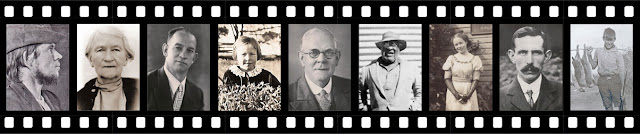

Our Biographical Dictionary contains information on thousands of people with connections to Carnamah, Coorow, Three Springs and other nearby places. Below were the most viewed entries in the dictionary during 2022.

1. Local bushranger Frank Thomas

2. Bishop Rosendo Salvado of the Benedictine Monastery in New Norcia

3. Shepherd and farmhand Joachim Dido of Carnamah

4. Granny Latham of Coorow (Mary Oliver / Latham)

6. Sarah Campbell of Arrino

7. Renowned building contractor and later the world's largest individual farmer Gus Liebe of Waddy Forest

8. Scottish born Duncan Macpherson who established the pastoral station 'Carnamah' in the 1860s

9. Albert Nebrong, the son of Aboriginal woman Mary Wirbina and a member of the Macpherson family

10. Carnamah farmhand, shearer and farm manager Teddy Edwards

Thursday, 16 January 2020

Biographical Dictionary now a registered publication!

Our Biographical Dictionary of Coorow, Carnamah and Three Springs is now an officially registered online publication! It has been allocated International Standard Serial Number (ISSN) 2652-4287 by the National Library of Australia. The dictionary has been accessed just under 300,000 times over the past five years and can be searched by surname or keyword at www.carnamah.com.au/biographical-dictionary


Biographical Dictionary of Coorow, Carnamah and Three Springs
International Standard Serial Number (ISSN) 2652-4287
Published by Carnamah Historical Society & Museum and North Midlands Project
4-10 Macpherson Street, Carnamah WA 6517, Australia

Tuesday, 31 October 2017

10863 Bushranger presented by Act-Belong-Commit now at Fremantle Prison

The exhibition 10863 Bushranger presented by Act-Belong-Commit is at the historic Fremantle Prison until 2 January 2017. The exhibition consists of a series of artworks produced by WA visual artist Di Taylor, who was the inaugural artist in residence of the North Midlands Project and The Bank Gallery Space in Carnamah during 2017. Each artwork is accompanied by a short story or anecdote about our local bushranger Frank Thomas, who grew up in Coorow.

The exhibition can be found within one of Fremantle Prison's free galleries and can be visited during their opening hours, which are every day from 9am to 5pm except for Christmas day. The prison is located at 1 The Terrace in Fremantle. For more info, check out their website at www.fremantleprison.com.au


Above: Take Away (Chicken) by Di Taylor
Embedded in local folklore is the story of police discovering bushranger Frank Thomas' camp where he was cooking a stolen chicken. He leapt onto his horse and took off, with the police following in hot pursuit. The police eventually lost sight of him so decided they'd return and enjoy his chicken. When they arrived back at Frank's camp he'd already doubled back, taken the chicken and left again!


Above:  Photos of Frank Thomas from the Police Gazette of WA
The photos for the double mugshot were taken when Frank was released from Fremantle Prison in 1921. For more on Frank, check out his entry in the Biographical Dictionary of Coorow, Carnamah and Three Springs.

Wednesday, 31 December 2014

MMXIV: Highlights from 2014

During 2014 one of our most popular blog posts was 2013: The Year in Review. We've taken that statistic as a mandate for a similar post to recap some of our highlights from 2014.

Biographical Dictionary

It was the end of an era as we bid farewell to our much-loved Coorow-Waddy, Carnamah-Winchester and Three Springs databases. It wasn't bad news though, as they joined forces to become a new and improved Biographical DictionaryThe new online dictionary is much easier to search and navigate, includes photographs and streamlines contributions from members of the public.


Museums and Galleries National Award

Our Virtual Museum: to be known and distinguished as Carnamah was the Level 1 winner of the Permanent Exhibition category at the 2014 Museums and Galleries National Awards. The judge's summarised us as "A small society with an innovative solution to extending their audience and sharing a larger proportion of their collection with the community. The website is very creative with excellent production values and interpretative images and narratives."


Memories of the Midland Railway

The privately owned Midland Railway was purchased by the Government of Western Australia in 1964. To mark 50 years since the takeover, we accepted an invitation to collaborate with Rail Heritage WA to gather memories and stories of what was affectionately known as the family railway. Many of the stories have been featured in the book Memories of the Midland Railway Co. of Western Australia by Philippa Rogers. Copies of the book can be purchased at our museum or alternatively some of the stories can be read at the end of our virtual exhibition on the Midland Railway.

During the year we completed, in partnership with Ignite Your Audience, an education resource on the Midland Railway. It links to years five and six of the Australian History Curriculum and is freely available for teachers via our Education Resources page. We also published Jeff Austin's histories on the railway's Stations & Sidings.


Virtual Volunteering

We did it! Hundreds of online volunteers, and especially a dedicated few, have successfully text-corrected and transcribed all of our local electoral rolls for the Commonwealth subdivisions of Irwin and Moore from 1903 to 1969. We are presently amalgamating the transcriptions into a single index to be published online.

During 2014 our Virtual Volunteering website has also hosted the virtual transcription of WA Biographical Index cards for the State Library of Western Australia. Thousands of helpers have transcribed over 30,000 cards... but there's still plenty more to go!


Carnamah Museum

As with every year, we have been kept busy running our museum and caring for the state heritage-listed Macpherson Homestead. If you're ever in Carnamah or passing through, we invite you to come and say hello. Our museum is open Friday afternoons or at any other time by prior arrangement.

Friday, 10 June 2011

Carnamah’s Place at the National Museum of Australia

Soldier Settlement in Carnamah after the First World War is now showcased at the National Museum of Australia (NMA) in Canberra. It is one of many stories told in the museum’s Landmarks: People and Places across Australia gallery, which opened on 2 June 2011.


Landmarks is split into ten themes that explore the very different stories of Australia, its places and its peoples. Carnamah, with two other places, make up the theme Extending the Farmlands. Carnamah had a relatively small population, but soldier settlement transformed the district into a thriving agricultural community.

The section on Carnamah centres around the stories of five soldier settlers and their families, and tells stories of both advancement but also of defeat (on account of small acreage, the Great Depression and salinity). The five soldier settlers detailed are Tom White, Jack Spork, Tom Garth, Anster Tucker and Roger Clark.

The centrepieces for Carnamah are a garden gate with a section of fence and a pile of York Gum stumps. These came from Tom White’s Rosedale Farm in Winchester and were donated to the museum by Bruce White. The supports of the gate include original pieces of the Midland Railway line.

In a large display cabinet there are a host of items relating to the five families which chronicle their wartime service, personal lives, farming, domestic tasks and recreational activities.


So how did Carnamah find its way into the National Museum?

Several years ago we received a phone call from NMA curator George Main. From a Google search he had come across our website and in particular its Carnamah-Winchester Database. He was impressed with our content and wanted to make the story of post-WW1 solider settlement in Carnamah part of the museum’s then forthcoming gallery.

In conversation with George Main at the opening he remarked in reference to our database that “there’s nothing else like it in Australia.”

Carnamah was represented at the opening of Landmarks by Christopher White (great grandson of solider settler Tom White) and Andrew S. Bowman.

If you’re ever in Canberra check out Carnamah and the rest of the brilliant Landmarks gallery at the National Museum. Admission is free and the museum is open from 9am to 5pm every day of the year except Christmas Day.

Want to know more about Carnamah's history?
Visit our website or find us on Facebook and Twitter.

Tuesday, 10 May 2011

Take that down!

Sensitive information. It can be hard to know what causes offense or what people don’t want published. Online publishing often scares people the most. Publish it in a book and they’re delighted. Publish it online and you’re being disrespectful and inappropriate.

We have all sorts of information on thousands of people on our website – some living, most deceased. We’ve had all sorts of complaints – but probably not what you’d expect!

Most complaints have been about the absence of living individuals in our database. Numerous times an e-mail has come in enquiring why we’ve omitted, left out or deleted someone [read in an angry tone!]. Contrary to the worry of most we’ve actually never had a complaint about entries for living people in our databases. If we did though, I’d happily remove them from our website but keep it on file.

Sometimes offence is caused over the belief something is wrong or incorrect. If you reference you can explain where the information came from and ask for further information. On occasion neither party is right – with the truth somewhere in the middle. Complaints can be a great opportunity to get more information or another perspective.

There was one very unfortunate occasion when we caused enormous distress to an elderly person who was previously unaware of information we had on a parent who had died over 70 years ago. We hadn’t done anything wrong with the information we had, and it came from appropriate sources.

The solution? Don’t be scared. Reference your information. Apologise if you cause offence. The reality is if you’re going to be historically accurate you’re going to offend someone at some point. The past wasn’t always nice and rosy.

Monday, 9 May 2011

The Carnamah-Winchester Database

Seven years ago we started a website and then wondered what we could put on it. Another member of the Society had begun a database of past residents and I re-formatted selected parts of this to go online. Myself and Jill added to it – new names and new details – and it grew and grew into a massive comprehensive database.

For the two of us it became the priority. We both saw the benefit that a database of past residents could achieve. We’re a local history society with a local history museum – so every bit of information and object generally relates in some way to one person or another. Not only that, but most people are interested in someone, a particular person or family.

What do a lot people do when they get a local history book? They go straight to the index at the back of the book to look up which pages the people they’re interested can be found. So our logic was to compile the history of the district by person instead of by chapter. Obviously we won’t know of every single person but we’re doing our best to discover as many people as possible – from people, postal directories, electoral rolls, rate books, newspapers and many other resources (see our sources page).

We go through a resource and add everything we find about each person under their name. Each fact is on a new line with a source reference at the end of the line. Slowly, line by line, fact by fact, the entries build up to be quite comprehensive, and all fully referenced.

Some have asked why online, it should be in a book. I say NO WAY. The beauty of online publishing is that it can be updated and changed. A book requires a completion date and is quite final. Our database evolves and is continually added to, and can be updated online just as easily. The other big plus is the audience. Almost 20,000 people a year look at our database – that’s a lot more visitors than our museum would ever receive.

This exposure has so many wonderful effects. We get feedback, corrections, further information, new names and photographs. Another equally wonderful benefit is that we create a connection and interest in Carnamah and its past with people who would never have otherwise found us. Most visitors to our website had searched a name with no knowledge of Carnamah or even where Carnamah is! This has a flow-on effect as some of these people then visit Carnamah and our museum.

UPDATE: The Carnamah-Winchester Database is now part of the Biographical Dictionary of Coorow, Carnamah and Three Springs.